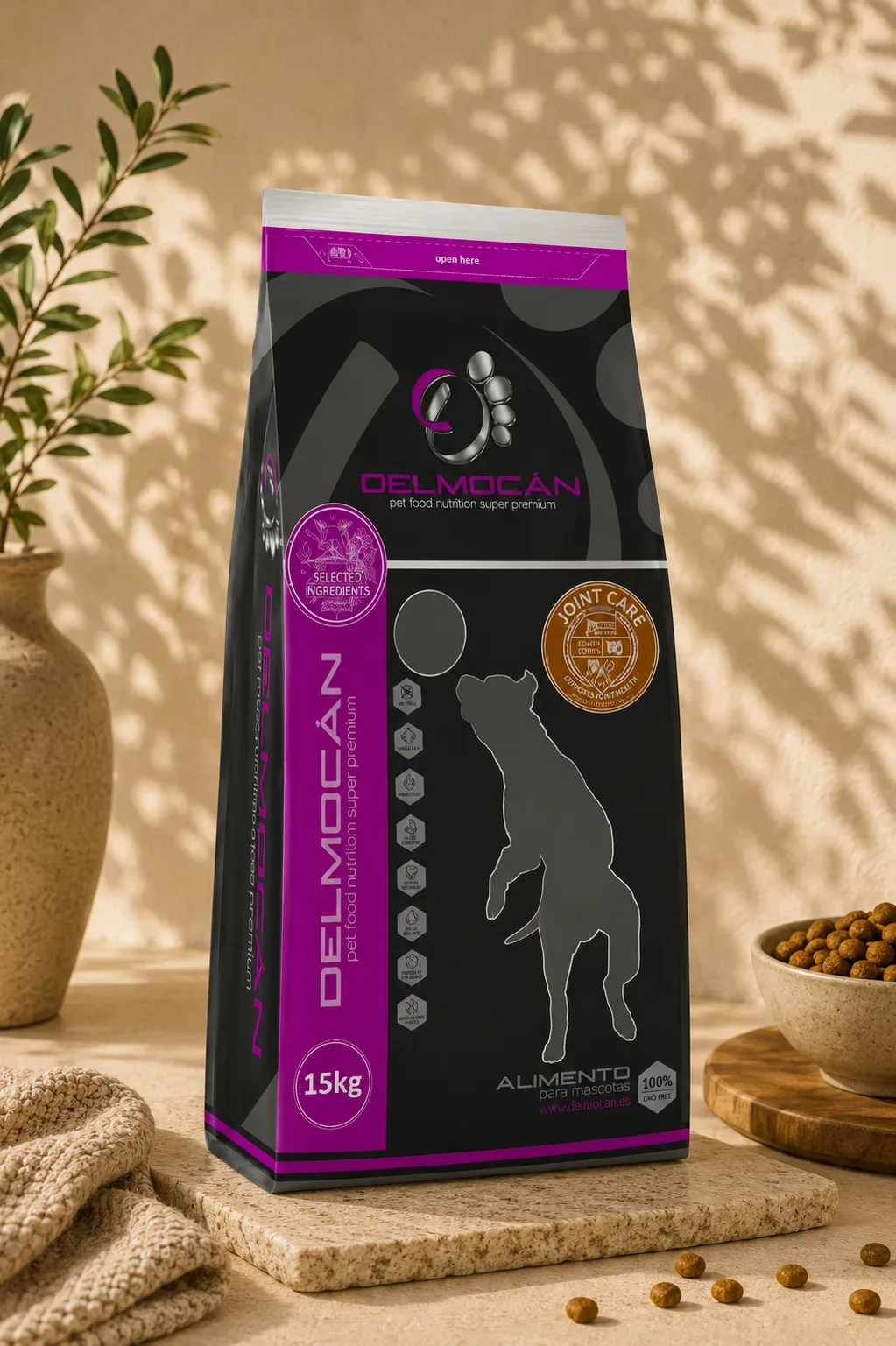
Started Care (15Kg)
Descripción Pienso hipoalergénico grain free especialmente formulado para cachorros en crecimiento y madres…
60.46 EUR
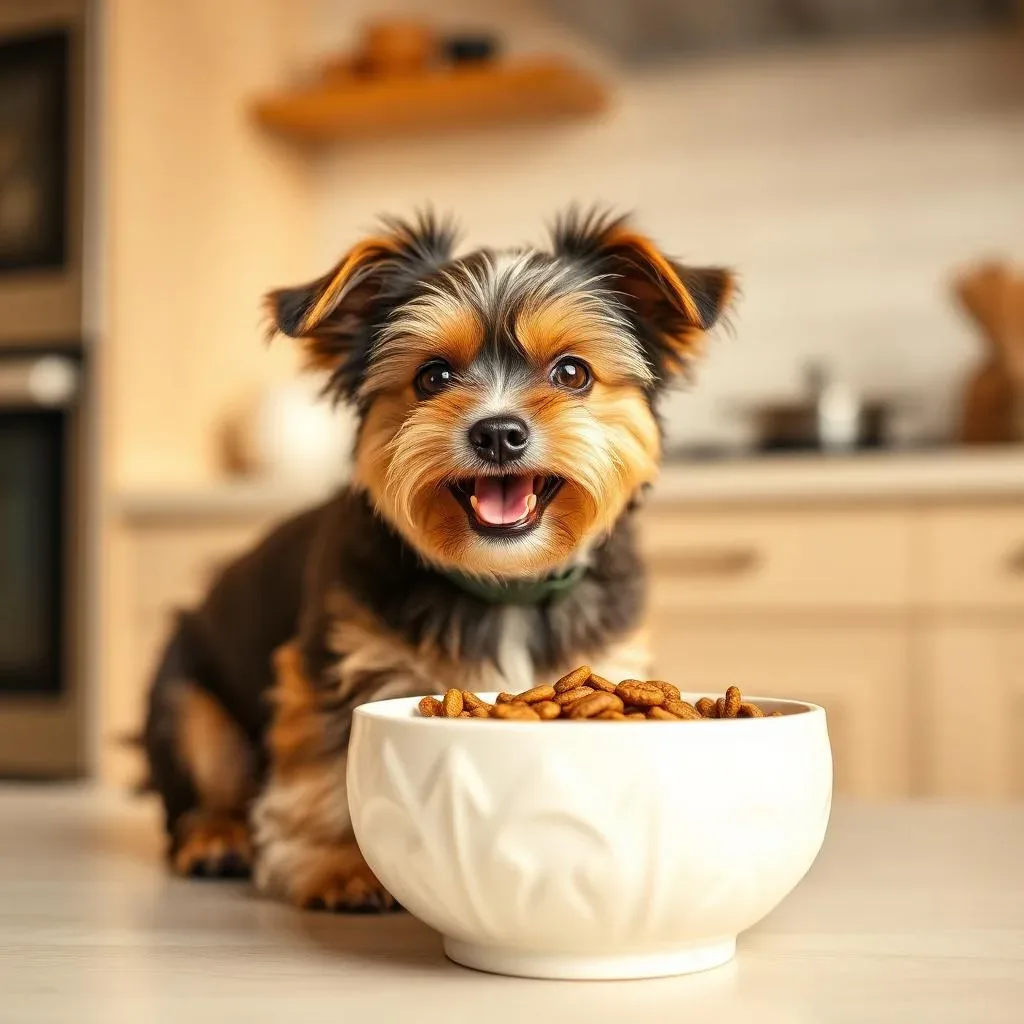
Puppy food formulated by vets with DHA for brain development, balanced calcium and phosphorus for strong bones.
During the first year, a puppy multiplies its weight several times and builds bones, muscle, immune system and brain at a speed it will never repeat. What it eats at this stage influences its health for years; that is why puppy food is not a smaller version of an adult one: it has its own needs.
These recipes provide more protein and calories per serving to support growth, DHA from salmon oil for brain and visual development, and balanced calcium and phosphorus so the skeleton forms strong, without excesses that can be counterproductive in large breeds.
Up to 4-5 months it is best to split the food into 3-4 daily meals; afterwards it can drop to two. Follow the feeding chart by weight and age, and adjust by watching body condition: a healthy puppy is filled out but not chubby.
Beware of overfeeding, especially in large and giant breeds: growing too fast overloads the developing joints. It is neither about fattening it as soon as possible nor falling short; it is about steady, well-measured growth.
2 products
Descripción Pienso hipoalergénico grain free especialmente formulado para cachorros en crecimiento y madres…
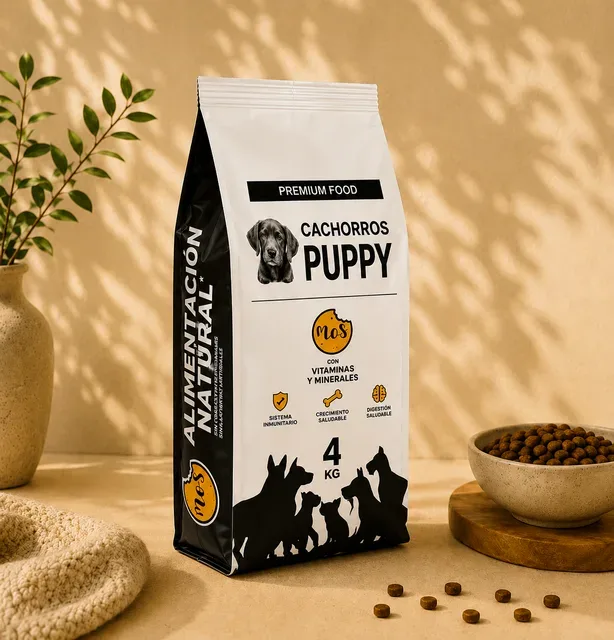
Descripción Cachorros - Puppy es un alimento completo de alta palatabilidad para cachorros de todas las razas…
Puppies can start eating solid food from 3-4 weeks of age, when weaning begins. Up to 2 months, the ideal is to moisten it with warm water to soften it. From 2 months they can eat dry food without any problem.
Puppy food has a higher concentration of protein, calcium, phosphorus and DHA for muscle, bone and brain development, and more calories per kg to support rapid growth. An adult food does not cover these specific needs of the growth stage.
It depends on size: small breeds (up to 10 kg) switch to adult at 10-12 months, medium breeds at 12-15 months, and large or giant breeds up to 18-24 months, because they take longer to complete their development. Make the transition gradually over 7-10 days.
Up to 4-5 months, split the ration into 3-4 daily meals so as not to overload the stomach. After that you can move to 2 meals. Keeping fixed times also helps establish routines and makes learning hygiene habits easier.